
How much does it really cost to build a house in NZ? A 2026 cost breakdown.
For many people planning a new home, the biggest question is often the hardest to answer - “how much is this actually going to cost?” Not knowing can feel like a cloud over a prospective homeowners head, lurking every time they try to envision what they want their home to be like.
The reality is there’s no one-size-fits-all figure. The final cost of building a home in New Zealand can vary depending on factors like location, site conditions, home size, design complexity, market conditions at the time of build, and the list goes on.
But like all things, knowledge is the key to confidence. By knowing what impacts build costs in New Zealand, you can get a clearer picture of what to expect and where your budget is really going.
That’s why we’ve put together this guide to help you get clear on potential house-building costs, and things to look out for when it comes to sticking to your budget. Here’s the lowdown.
What Is the Average Cost to Build a House in New Zealand?
Build costs can vary widely depending on the location. Factors such as access to suppliers, transport costs, labour availability, and ground conditions can all influence the price of a project.
That means while we can’t speak for all of New Zealand, we can use the Queenstown Lakes region as an example. Here, entry-level builds typically start from around $3,500–$4,000 per square metre, while high-spec homes can be over $9,000 per square metre.
However, even with an average price every site and every home is different, which is why it’s important to look beyond these figures when comparing costs.
For example, one quote may include full landscaping, driveways, and fencing, while another might only cover the house itself. Foundation systems can also vary the price a lot — from standard slabs through to fully insulated foundations designed for alpine conditions. While site-specific requirements (such as earthworks, retaining, or difficult access) can also have a big impact on the final cost per square metre.
The specification of the home matters to the end price too. This is things like material selections, energy efficiency, heating systems, glazing performance, and interior finishes.
Since it is so varied and personal to each build, we prefer to approach each project individually rather than using a generic square metre rate. This allows us to design homes around our clients’ goals, lifestyle, land, and budget, so that the investment works for you.
Key Factors That Affect the Cost of Building a Home in NZ
Location & Site Conditions
Urban vs regional: Regional builds will have higher costs than those in urban areas. This is because physically transporting the items to the far away areas takes longer and costs more.
Slope, access, soil, services: These are all land related, and are a biggy.
A steep section will often need engineered retaining, and engineer inspections throughout the process to ensure the ground is suitable (and safe) for your home. If more dirt needs to be carted out or in, the cost then increases substantially before you’ve even got the foundation down. And when it comes to services, it will all depend on whether there are already services to the boundary, and or if you need to create a soakhole (an underground cavity that collects rainwater and allows it to absorb into the soil).
House Size & Design Complexity
Simple footprints vs architectural builds: The simpler the design, the less corners, the less time consuming to build. And the less time consuming to build, the lower the overall labour cost. However, a simple footprint isn’t always possible, depending on the site and your goals for the home. External factors can also influence the design – for example, councils may impose restrictions on the maximum length of a home along boundary lines. And while simple designs are often more cost-effective, they can be a bit boring. If you want a more architectural or distinctive design, expect the price to reflect that.
Not all square meters are the same: For example, a 150sqm home with two bathrooms and no garage will cost more than a 150sqm home with one bathroom and a two car garage. Additional bathrooms equal additional plumbing and more bathroom fittings which costs a lot more than say a bedroom that just has painted walls and carpet. Same size home but with different sqm costs.
Single vs two-storey: Two-storey homes are generally more expensive to build due to the additional structural requirements, stairs, and complexity. However, on smaller sections, building upwards is sometimes the only practical option.
Materials & Finishes
Cladding, roofing, windows: Every cladding option impacts the overall build cost, and each comes with its own pros and cons. When choosing materials, it’s important to consider not only the look you want, but also maintenance requirements, durability, and how much of your budget the materials will take. Timber cladding, for example, can vary significantly in price and requires staining during construction and ongoing maintenance for longevity. Brick, on the other hand, is becoming increasingly popular in our region due to its durability and low-maintenance needs.
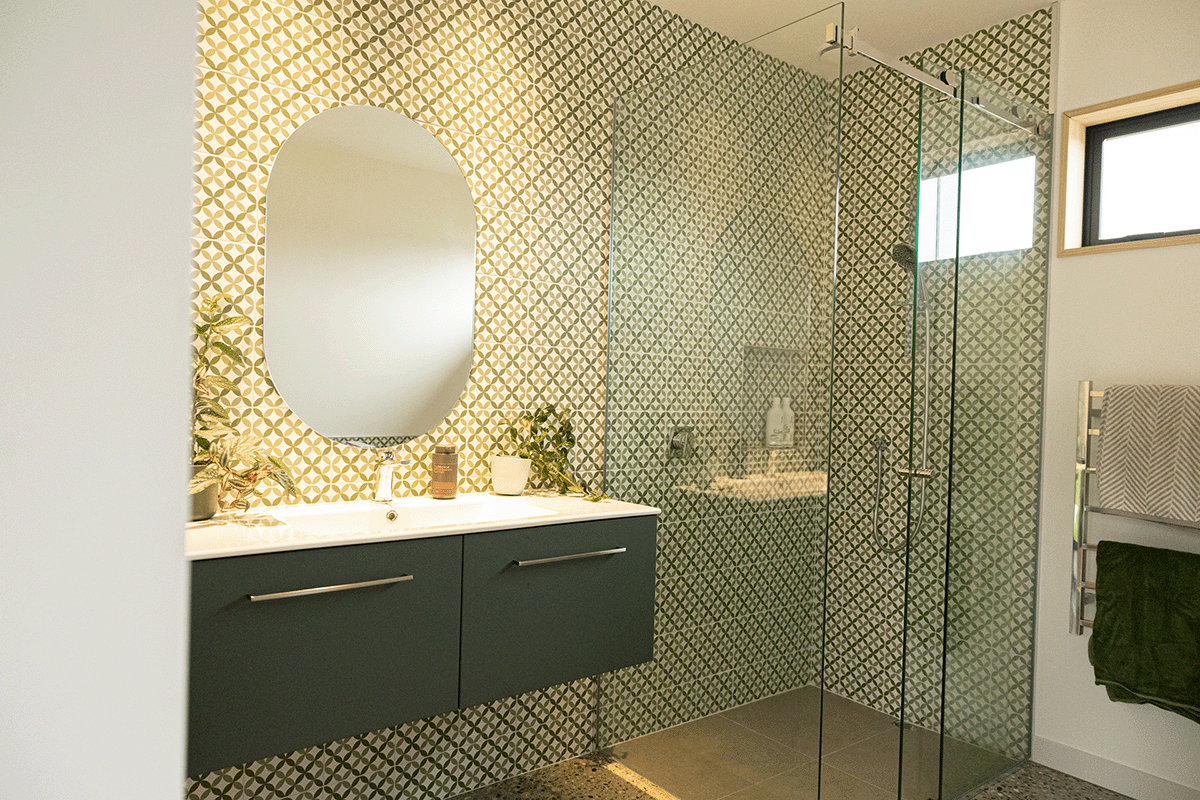
Kitchens, bathrooms, flooring: These are often the areas where budget decisions have the biggest impact. A fully tiled bathroom with high-end fittings and custom vanities will cost considerably more per square metre than a bathroom with an acrylic shower, painted GIB walls, and vinyl flooring. Flooring choices also vary greatly in price — engineered timber flooring versus laminate, or wool carpet versus nylon, can make a substantial difference to the final cost. Additional design features such as timber feature screens, custom joinery, or bespoke finishes can also increase the overall square metre rate.
What’s Included in Build Costs — and What’s Not?
When you get a quote for your new build it would make sense to assume that everything is included. But it’s not.
The most important part of the process is ensuring you have a clear understanding of what your builder has included in the pricing and specifications. Ask lots of questions early in the process and make sure the features, finishes, and details you actually want are clearly outlined. This is the time to think carefully about how you want each room to look and function, as changes made later during the build can often add significant costs.
Typically Included
Structure, labour, standard fixtures
Basic plans and compliance
Often Excluded (Hidden Costs)
Landscaping, fencing, driveways
Council fees and development contributions
Utility connections
Window furnishings and appliances
Building a New Home vs Buying an Existing One
Cost comparison (short-term vs long-term).
One of the biggest considerations when deciding between building new or buying an existing home is understanding your long-term goals. Is this your forever home, where the comfort, functionality, and maintenance costs are important? Or is it your first home, where getting onto the ladder is your main priority?Building new can often mean a higher upfront cost, but it could result in better long-term value thanks to energy efficiency, reduced maintenance, and a layout that suits your lifestyle. While existing homes are often a lower initial purchase price, renovation, maintenance, and running costs can add up over time.
Energy efficiency & maintenance.
A new home gives you the opportunity to make your own choices around materials, orientation, and performance. Factors such as site layout, insulation, window placement, and solar gain can have a major impact on comfort and energy efficiency. In our region especially, solar orientation is important –it can mean natural warmth and heating costs throughout the year.When it comes to maintenance a new build gives you a chance to consider whether you want ongoing upkeep, such as regular timber staining, or whether low-maintenance cladding options are a better choice for your lifestyle.
Lifestyle and customisation benefits.
When you build a new home you can create a space that suits your lifestyle, tastes, and future plans. From floor plan layout to finishes and storage solutions, every detail can be designed to suit the way you live. Whether you want space for entertaining, a home office, or future-proofing for a family, building new gives you more personalisation than buying an existing home.
How to Budget Smartly for Your NZ Home Build
Allow for Contingencies
We recommend having a contingency buffer to cover any unexpected cost. While many blogs recommend 10% we know that’s not always achievable for our clients, so we recommend putting aside 3-4% of your total budget and always base our quotes on consented plans, reducing the likelihood of needing to use it.
In New Zealand, the building industry is often impacted by global supply and pricing changes. Since we import most of our building materials, changes elsewhere can quickly affect availability, timelines, and costs. Having a contingency in place helps reduce stress and keeps your project moving if unexpected expenses arise.
Fixed Price vs Cost-Plus Contracts
Fixed price contract: It provides more certainty around costs, allowing homeowners to plan their finances and understand what payments are due at each stage of the build. However, many contracts still contain clauses allowing for price increases, meaning the final cost may still change.
Charge-up or cost-plus contract: This can provide greater transparency, as clients can see exactly where costs are being allocated throughout the build. This approach is more flexible but does make it harder to predict the final overall cost.
Fixed-price contracts generally suit homeowners wanting more budget certainty and structure, while cost-plus contracts may be better for those wanting transparency, or highly customised builds.
Whichever one you choose, make sure to work with a builder with experience in your area, as each region has different needs to consider.
Final Thoughts: Is Building a House in NZ Worth the Cost?
There’s no denying that building a home in New Zealand is a big investment. But with the right planning, the right builder, and a clear understanding of what’s included, it could be the right solution for your home goals.
By asking the right questions and considering a contingency plan, you can make it easier and less scary.
If you’re considering building and want realistic guidance early, talking to an experienced local builder can save time, stress, and money. On that note, we happen to know a good one, get in touch.
