
Harnessing solar power for your next build
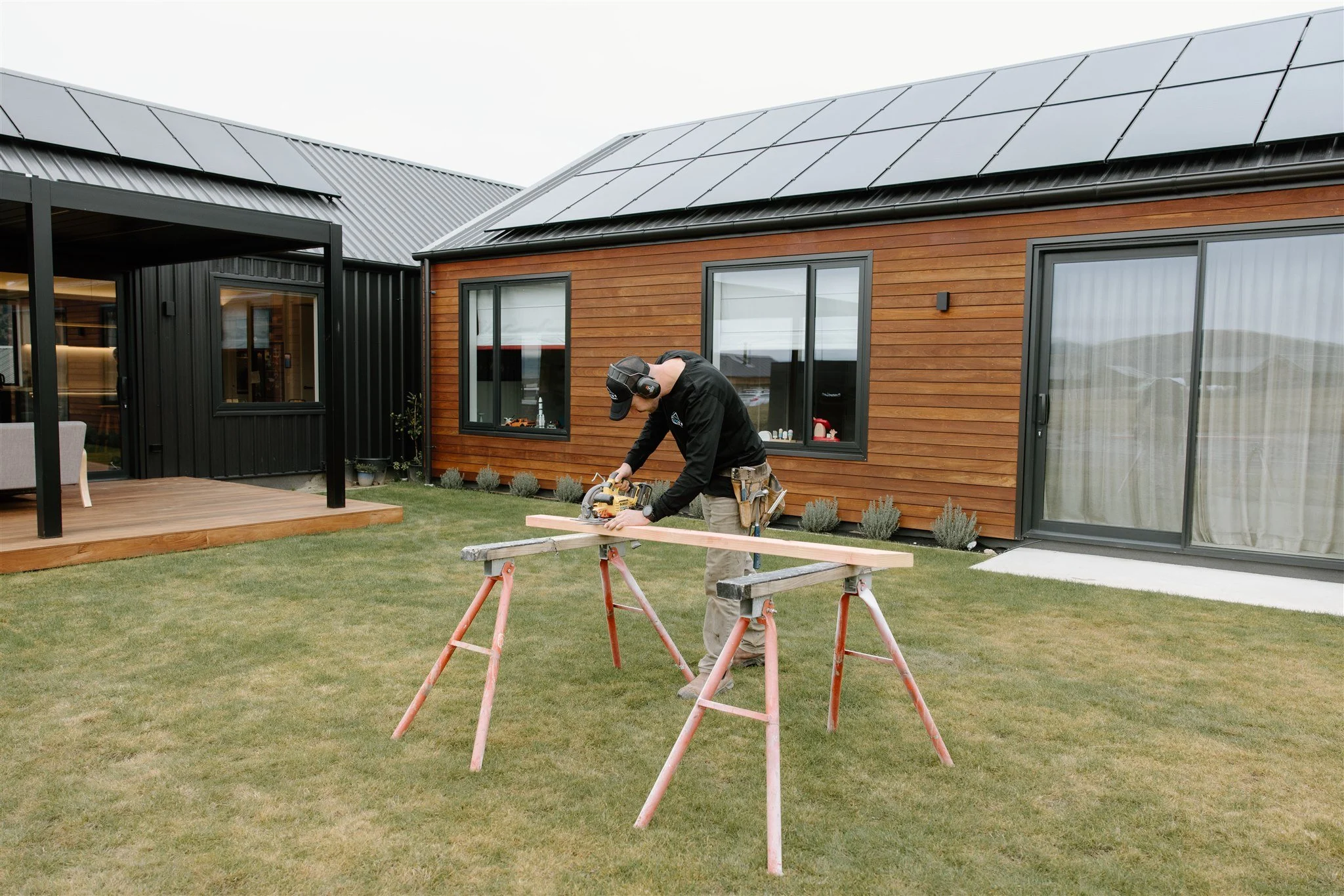
When it comes to building a new home in the current economic climate, additions like solar panels often feel like a luxury. But whether you’re giving the green light from the get-go, or hoping to fit it into the budget down the line, considering solar in the design stage can save you time, money and strife.
While solar power is growing in popularity, it’s still not a mainstream choice for many New Zealanders. Often, that comes down to uncertainty around how it works, what it costs, and whether it’s really worth it. To be clear, at CKH Construction we’re not solar experts. What we are is a local building company that cares deeply about helping homeowners make better choices, choices that save money over time and are a little lighter on the planet.
To get the practical lowdown, we spoke with our local solar specialist, Arron from Power On Point, about what it really takes to integrate solar into a new build – from early design decisions to installation and long-term performance.

Why solar power?
Electricity is one of the bigger fixed expenses for many households, especially as prices and energy usage continues to rise. Using solar power offers homeowners considerable power bills savings, giving them more independence from traditional energy retailers. Aside from the penny-saving perks, this also means a more resilient home as they’re not as reliant on external energy sources, especially if a battery system is added, providing back-up power in any power outage.
From an environmental perspective, solar helps reduce pressure on New Zealand’s hydroelectric system, particularly when lake levels are low – something we’ve experienced more than once in Central Otago. And of course, the sun is a renewable resource. It’s not going anywhere anytime soon.
In terms of tangible benefits of solar power, we see real results every day with our clients.
Solar power really can help you save money, good money at that. While outcomes depend on things like system size, whether a battery is included, and how each household uses their power, most of Arron’s clients typically reduce their grid power consumption by around 40–60% each year.
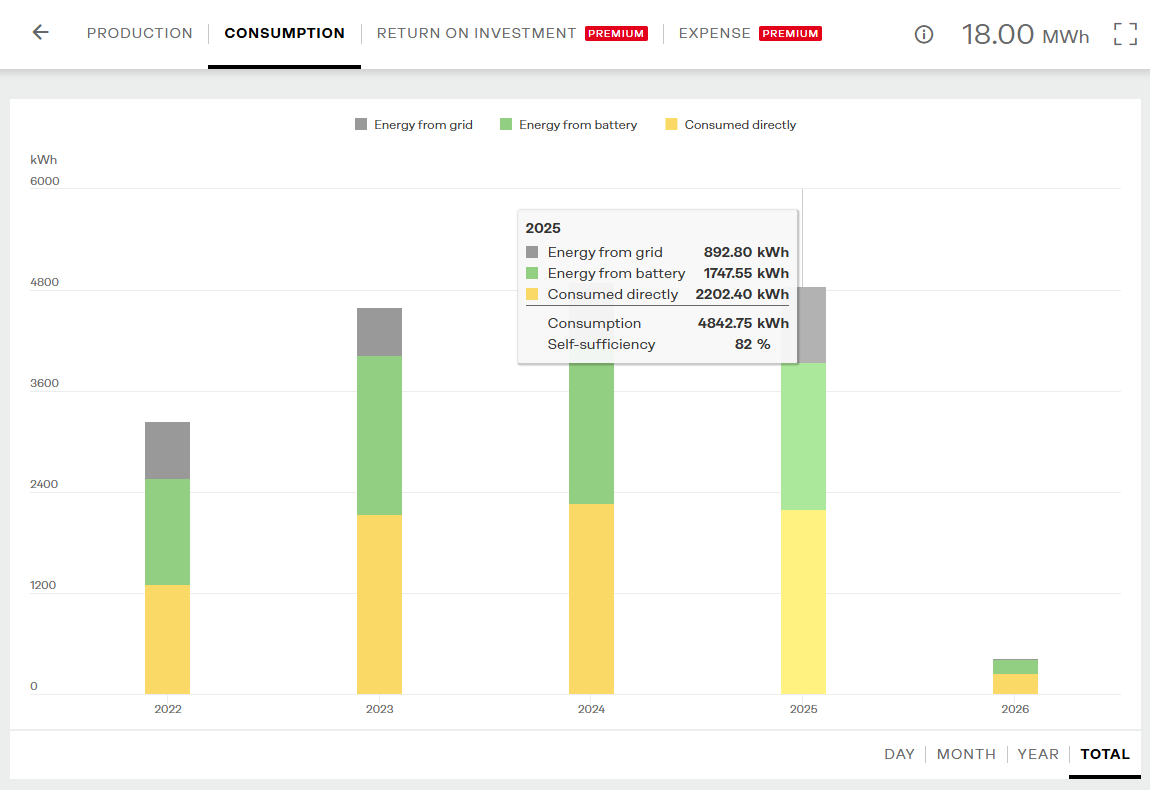
From this graph you can see the cost-savings effects of solar energy on Power on Point’s client’s home.
This shows that in 2025 their total energy self-sufficiency was 82%. This means they only had to purchase the remaining 18% from their energy retailer.
In other words they reduced their power bills by over 80%. Not bad going.
Design and build considerations for solar
The performance of a solar system isn’t just about the panels themselves, it’s also shaped by how the home is designed. Thinking about solar early can save time, money, and compromise later on. Key considerations include roof pitch, orientation, shading, and roofing materials.
Roof pitch: Solar panels perform at most angles, but for strong year-round results, a roof pitch of around 25–35 degrees is ideal. Steeper pitches tend to perform better in winter, while lower pitches favour summer generation. The best solution balances energy needs across the entire year.
Orientation: For maximum annual output, solar arrays are ideally oriented north. East- and west-facing panels can still perform very well, particularly for spreading energy generation across the day, though winter output may be slightly lower.
Roofing materials:
Solar panels can be installed on most roofing materials, but Power on Point has found that standard Coloursteel profiles are the most straightforward and therefore cost effective option for installation.
Cost expectations for solar power
Upfront costs and long-term savings of solar power depend on the specifics of each home. Things like system size, whether a battery is included, local electricity prices, and household energy habits all play a role.
In general, residential solar systems in New Zealand have a typical payback period of around 5–12 years, with an estimated return on investment of 6–14% per year (according to EECA). Once the system has paid for itself, the ongoing savings can be substantial.
While there are currently no direct government grants or rebates for residential solar installations, there are still ways to make solar more accessible. Many major New Zealand banks now offer “green” or energy-efficient loans for new and existing mortgage holders. These often come with very low fixed term interest rates helping offset upfront costs.
Where does CKH Construction fit in this process?
For us, solar is about future-proofing. Even if panels aren’t installed straight away, thinking about solar during the design and build stage gives homeowners more flexibility later.
We work closely with partners like Power On Point to help clients understand the true cost, return on investment, and long-term benefits of solar. This might mean pre-wiring the home so panels or batteries can be added later without disruption, or mapping out a staged approach that allows solar to be added when the timing is right.
There’s no better time to consider solar, than right now.
Solar doesn’t have to be complicated, and it doesn’t have to happen all at once. With a little foresight at the design stage, you can make smart decisions that reduce costs, increase comfort, and set your home up for the future.
If you’re planning a new build in Wānaka or Central Otago and want to explore how solar might fit into the bigger picture, we’re always happy to chat, otherwise Arron is a great first port of call.
